Housing & rent / Guide
USDA Section 504 Home Repair Loans and Grants: Who Qualifies
USDA Section 504 lends up to $40,000 at 1% for 20 years to fix a rural home you own; owners 62+ can get up to $10,000 in grants. Check if you qualify.
The short answer: USDA's Section 504 Home Repair program lends up to $40,000 at a fixed 1% for 20 years to fix a home you own and live in, in an eligible rural area, when your household income is under the county's low-income limit. Owners 62 and older with very low income can also get a grant of up to $10,000 to remove health and safety hazards, and a loan and grant together can reach $50,000. Applications are open all year at your local Rural Development office: check your address and county income limit today, then send the intake form.
For an owner 62 or older with very low income and a hazard to fix, the office applies the grant first and covers the rest with a 1% loan when your budget can carry the payment. Since July 2026, when the 21st Century ROAD to Housing Act changed the law, the loan is open to low-income households as well as very low-income ones.
Section 504 loan and grant terms
| Rule | Repair loan | Repair grant |
|---|---|---|
| Age | No age test | 62 or older |
| Income | At or under the county low-income limit | At or under the very low-income limit, also required for a loan-and-grant combination |
| Maximum | $40,000 in total 504 loans | $10,000 lifetime, per household and per house |
| Cost | 1% fixed, 20 years, monthly payments | Repaid in full only if you sell within 3 years of signing the grant agreement |
| Uses | Repairs, improvements, modernization, hazard removal | Health and safety hazards, or access for a household member with a disability |
At 1% over 20 years, a $10,000 loan costs about $46 a month and the full $40,000 about $184. At $15,000 or more in total 504 debt, USDA records a mortgage on the house, and above that you keep hazard insurance on it.
The four tests you must pass
- You own the home and live in it. It is your principal residence, a modest single-family house, not a rental. A deed is the standard proof; a lease, land purchase contract or life estate also counts. A mobile or manufactured home qualifies for hazard repairs when you own the home and the land, lived there before applying, and it sits on a permanent foundation or 504 money puts it on one.
- The address is rural on USDA's map. Enter it in USDA's property eligibility lookup under Single Family Housing Direct.
- Your adjusted income is under the county limit. Adjusted income is yearly household income minus deductions for dependents, child care and, when you or your spouse is 62 or older or disabled, an elderly deduction plus medical costs above 3% of income. Find your county in the FY 2026 income limits. For one to four people in Adair County, Kentucky, the lines are $35,950 (very low, for grants) and $57,500 (low, for loans); in Anderson County, Texas, $41,850 and $66,950. Five to eight people get higher limits.
- You have no affordable credit elsewhere. Savings and other non-retirement assets above $15,000, or $20,000 if you or your spouse is 62 or older or disabled, go toward the repair first. Home equity stays out of the count. You must be a U.S. citizen or qualified noncitizen.
A loan adds a budget test: total monthly debts, new payment included, can reach 41% of income; above that, the loan needs compensating factors a supervisor approves. A credit score of 620 or higher counts as acceptable; below that, the office reviews your payment history and leaves late housing payments out. Grant-only applicants skip the credit review.
What Section 504 money can fix
Loans cover general repairs and improvements, even an addition, as long as the house stays modest. The law names the typical jobs: roofs, sanitary waste facilities, a safe water supply, structural supports and hookups to central water and sewer. Loan and grant money can also replace a broken or missing stove, refrigerator, washer, dryer or permanent generator alongside other repairs and build a storm shelter in tornado and hurricane areas.
Grants pay only to remove a health or safety hazard or to make the home accessible. Unsafe water, a failed septic system, no heat and natural-disaster damage put an application in first priority when funds run short.
Off the table: building a new house, moving a mobile home, repairs that leave a major hazard, and paying off debt you took on before applying. That last rule matters when a contractor pushes you to start now: work charged or financed before you apply stays your bill.
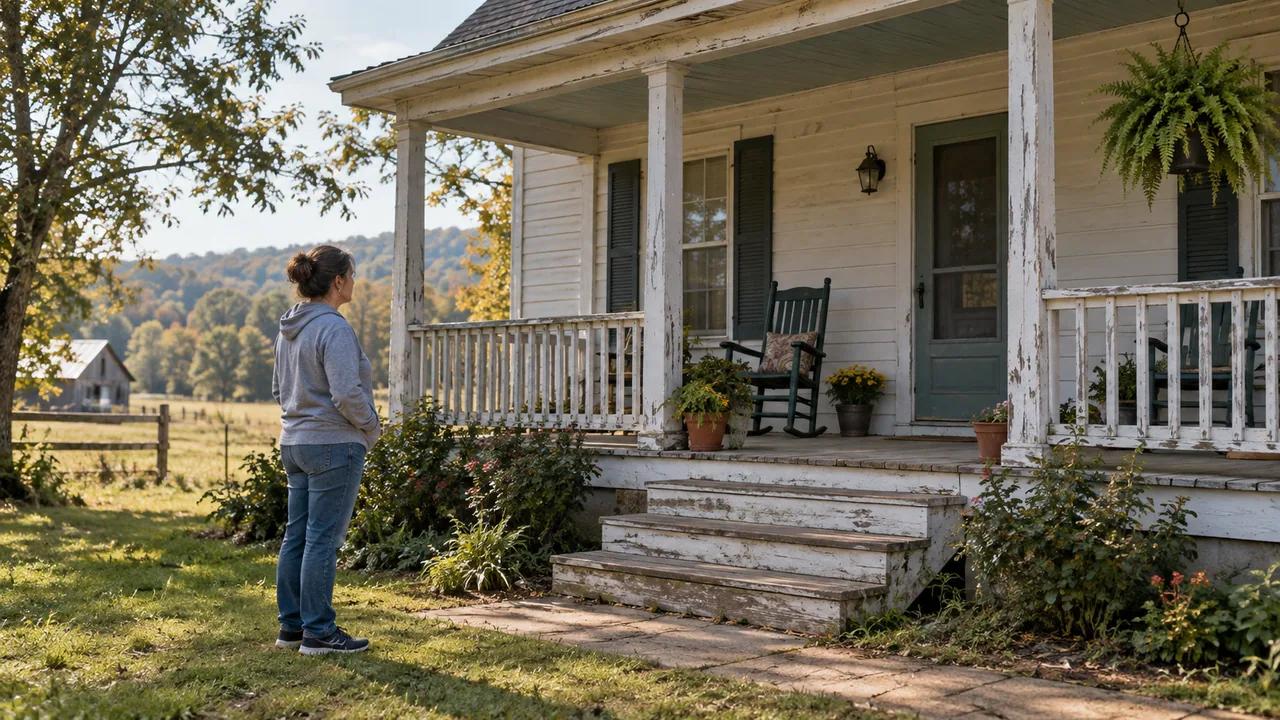
How to apply for a Section 504 repair loan or grant
- Find your office in USDA's state office directory, and ask for the home loan specialist who covers your county.
- Send the optional prequalification: Form RD 3550-35, the intake form, with a signed Form RD 3550-1 for every adult. The office pulls a credit report at no cost to you, estimates what you qualify for and processes the form within 30 days.
- Get an itemized estimate from a licensed contractor (labor, materials, quantities, model numbers) and photos of each problem and of the front and back of the house. You choose the contractor; the office checks any required license and whether the price is reasonable.
- File the full application: Form RD 410-4 with every section filled and pages 5 and 8 signed, Form RD 3550-4 and Form RD 3550-1 for each adult, and the Attachment 12-E checklist items: photo ID with proof of age, four weeks of pay stubs, benefit statements, two years of federal tax returns, two recent bank statements per household member, the deed, the property tax statement, proof of insurance and any mortgage statement.
- Hold the start date until approval and a pre-construction meeting with you, the contractor and USDA.
On the phone, say: "I own and live at [address] in [county] and want to apply for a Section 504 [loan / grant / both] to fix [what is broken and why it is unsafe]. We are [number] people with about $[amount] a year in income, and I am [age]. Please send the application package."
What happens after you apply
If an item is still missing 15 days after the office asks for it, or 30 days for repair estimates, the application counts as withdrawn. USDA decides eligibility within 30 days of a complete file; if it cannot, you get a letter with the expected wait. If your area's money is used up, you get a waiting-period letter and the file stays active: USDA accepts applications when funds are out and works them in the order received, hazard repairs first. Answer any letter asking whether you still want the help, or the office can withdraw the file.
A secured loan approval comes on Form RD 3550-7, which you sign and return within 15 days; a grant comes with Form RD 3550-24, the agreement carrying the three-year sale rule. The pre-construction meeting follows within 30 days when funds are available, and jobs over $10,000 use a written contract on Form RD 1924-6. Repairs typically finish within 30 days of starting. The contractor is usually paid in one lump sum after you sign Form RD 1924-9 accepting the work; no money moves before closing.
Where your case splits
- If your income is above the very low line but under the low line, or you are under 62, you can get the 1% loan but not the grant. If the payment strains your budget, a cosigner or another household member can join the application.
- If the deed is still in a late parent's name or shared among heirs, bring county tax records showing you as the owner who pays the taxes, or affidavits from people in your community that you have lived there as the owner for at least 10 years. A house owned by a trust or an LLC is ineligible, apart from limited exceptions for special needs trusts.
- If a declared disaster damaged the house, apply for FEMA disaster assistance too, and tell the 504 office that the damage came from the disaster.
If USDA turns you down
A denial comes in writing with the specific reasons. Request an informal review by the decision maker or a supervisor in writing within 30 calendar days of receiving the letter. A denial for lack of funds, a grant applicant under 62, the rural-area designation or income over the limit gets that review only. Other denials also open mediation and an appeal to USDA's National Appeals Division, each requested within 30 days of receiving the letter; send the appeal with a copy of the denial and a short statement of why it is wrong.
Public agencies, tribes and nonprofits with a state office agreement can package your application, and their fees can go into the loan or grant; for-profit packaging fees are excluded. Call a probate or legal aid lawyer when heirs disagree over the house or a trust holds the title.
Other help for repair costs
For drafts and heating efficiency, also apply for weatherization assistance; for a utility bill, use LIHEAP. To buy a rural home instead, see the USDA direct home loan guide. The SBA 504 loan is business financing.
Today
- Run your address through the property lookup and find your county's FY 2026 income lines.
- Call your Rural Development office with the script above and send Form RD 3550-35 with a Form RD 3550-1 for each adult.
What comes back: a prequalification result and the application package, then a decision or a waiting-period letter once your file is complete.
Before you apply
Build your application checklistKeep the steps in one place. Your checklist stays on this device; GovMoneyMap does not collect applications.